
The Challenges of the Constructivist Playspace in Singapore & Kurios Oasis' Solutions
What are the challenges of a constructivist playspace in Singapore & Kurios Oasis' solutions? In this post, I share the beginning thoughts I had that encouraged me to start Kurios Oasis.
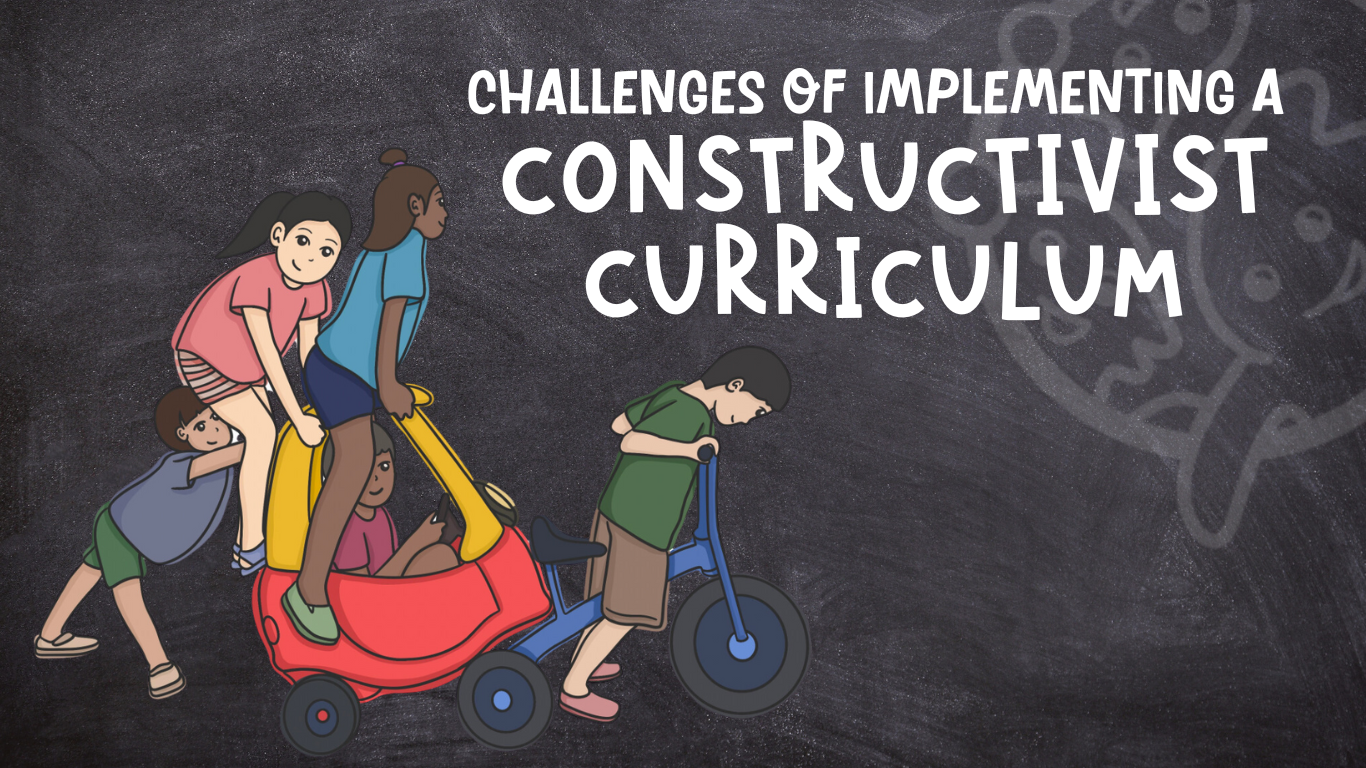
I usually find it really difficult to give a short but fair answer when people ask me why i want to start my own playspace. My usual answer..
Curious Person: Why start your own playspace?
Sam: Because I feel restricted in Singapore Preschool Classrooms and I'm not entirely willing to work through those restrictions and regulations.
Sounds a little terrible on my part, right? That i'm just giving up. In some sense, I did give up, I could've persisted, continue my journey with the start-up preschool i was with, but i want to play freely and play well with children (without the woes of business building) and without a doubt, if i were to leave the media industry or stop pursuing my own early childhood education dream, you will find me in a school that practices the emergent curriculum. For now, I'd like to have fun with my own play groups and play projects, with likeminded teachers. :) So what are those said challenges?
Challenge 1: Rigid timetables and lesson plans that reinforce the segmenting of subject areas.
A constructivist curriculum needs the flexibility of time for children to explore naturally and make sense of their own experience. However, the reality is that the majority of preschool classrooms in Singapore have a fixed classroom timetable that allows for very little time for experiential learning and exploration. For example, my daily schedule when I was teaching is like so: motor skills lesson, mother tongue lesson, snack time, large group lesson, learning centre time and, music and movement lesson. Each activity would last for thirty minutes, no less and no more. Teaching during large group lesson follows a central curriculum that all preschools of the same brand must follow (of course, there's always the grey area you could work with, tweak your lessons to be more child-directed and inquiry-based, but chances are, you'd have to run it through your supervisors if they're willing to accept modifications to the plan - so tiring, i'm sorry). In these large group lessons, teachers teach math, english and science explicitly, and in separate lessons. With such rigid timetables and lesson plans, teachers like myself, find it difficult to implement emergent and integrated curriculums.
My solution: goodbye traditional classroom structures, hello wonders of constructivism. Also the reason why Kurios Oasis Play Sessions will last for a minimum of 2 hours per session (I was hoping for it to be 3 hours long, but from my parent surveys, 3 hours for "enrichment" outside their school hours could be too long) ☹️ No worries though, we'll still slow down for Kurios Oasis Play Sessions and embrace the wonders of constructivism!
Challenge 2: Parents’ image of education
In Lee's (2018) letter in the Straits Times, issues about elitism and the academic rat race in Singapore - a consequence of the meritocratic & capitalist nature of our nation - are what makes the implementation of emergent curriculum challenging. Preschool education in Singapore is mainly offered by the private sector and these private enterprises seek to fulfil the parents’ desires of getting their children ready for primary school. An emergent curriculum which is constructivist in nature would call for the abolishment of didactic teaching practices, which is the transmission of knowledge solely from the teacher to the child. Instead, an emergent curriculum would look less structured and more flexible. In most cases, parents see a dichotomy between play and learning. Hence, with the reality that preschool operators still need to sustain a business, they may be more inclined to include time blocks for “math lesson” or “english lesson” – the explicit teaching of subjects – just to convince parents that teaching and learning is done in the school. When the curriculum has been set, teachers have no choice but to follow what is expected of them. Hence, the biggest challenge is to increase the demand for emergent curriculums by changing parents’ image of education.
My solution: Make learning visible for parents, present in public spaces, advocate for what I value, what i believe is important. My team and i will do our best to make learning fun and playful for children and hope that our documentation of their play will help you feel the power and joy behind our pedagogy at Kurios Oasis. I'll also expect and prepare myself to understand that not every parent believes in this pedagogy, play has always been viewed as something frivolous, but i'm hopeful that there are parents who believe in providing their children with such an opportunity to learn as well, and for them, we will give our very best.
Challenge 3: Some misconceptions in teacher training
Back in my beginning teacher years, my understanding of an "Integrated curriculum" was as simple as a lesson plan with "2 language and literacy objectives, 1 numeracy objective and 1 social and emotional objective". For example:
Theme: Animals, Lesson Title: Pigs in mud
Lesson objective: Children will paint mud above an image of a pig with a sponge and brown paint.
Language & Literacy Objective: Children will identify and use the terms 'mud' and 'pig'
Aesthetic & Creative Expressions: Children will use a sponge to do sponge painting
As I was trained to force fit these objectives to make lessons integrated, I lost the true meaning behind integrated learning (Just take a look at the objectives above-pseudo integration). Integrated and emergent curriculums are not as simple as what I was taught to do in my diploma. In order to make a constructivist curriculum effective and meaningful, the teachers have to be equipped with the ability to act spontaneously, identify children’s genuine interest and help children construct their own knowledge. When teachers are not aware of how a constructivist curriculum actually works, they may end up doing very superficial and meaningless things, such as asking children to count the number of lady bugs printed on a piece of paper when they are studying the topic about insects. This poses a significant challenge for the landscape of early childhood education because teachers have to be trained adequately and to understand the true meaning of integration in education. If the teachers cannot grasp the idea, the implementation of integrated and emergent curriculums cannot happen
My solution: Continue to be a reflective teacher, work together with the team to build a program that focuses on dispositions instead of superficial rote learning. This culture would not only apply to how we teach children but how we (teachers) teach ourselves.
We're going to take one step at a time with Kurios Oasis, I'm so glad that i get to practice again, this time, together with a small team of likeminded teachers. If you're keen to learn more and to keep updated, please subscribe to our website, follow @askteachersam for more early childhood content and @kuriosoasis for our play projects and program updates 😄
